A sudden ache on one side of your lower back can make you wonder whether you simply strained a muscle or something deeper is causing the problem. Lower right back pain commonly develops from muscles, joints, or other structures around the spine, but pain in this area can sometimes come from the kidneys, urinary tract, or abdominal and pelvic organs. Therefore, the location of the pain is useful, but the symptoms that occur with it matter just as much.
For many people, one-sided back pain improves with simple measures such as temporary activity modification and gentle movement. However, severe pain, fever, urinary symptoms, weakness, numbness, or significant abdominal symptoms can point toward a problem that needs medical attention.
What Does Lower Right Back Pain Feel Like?
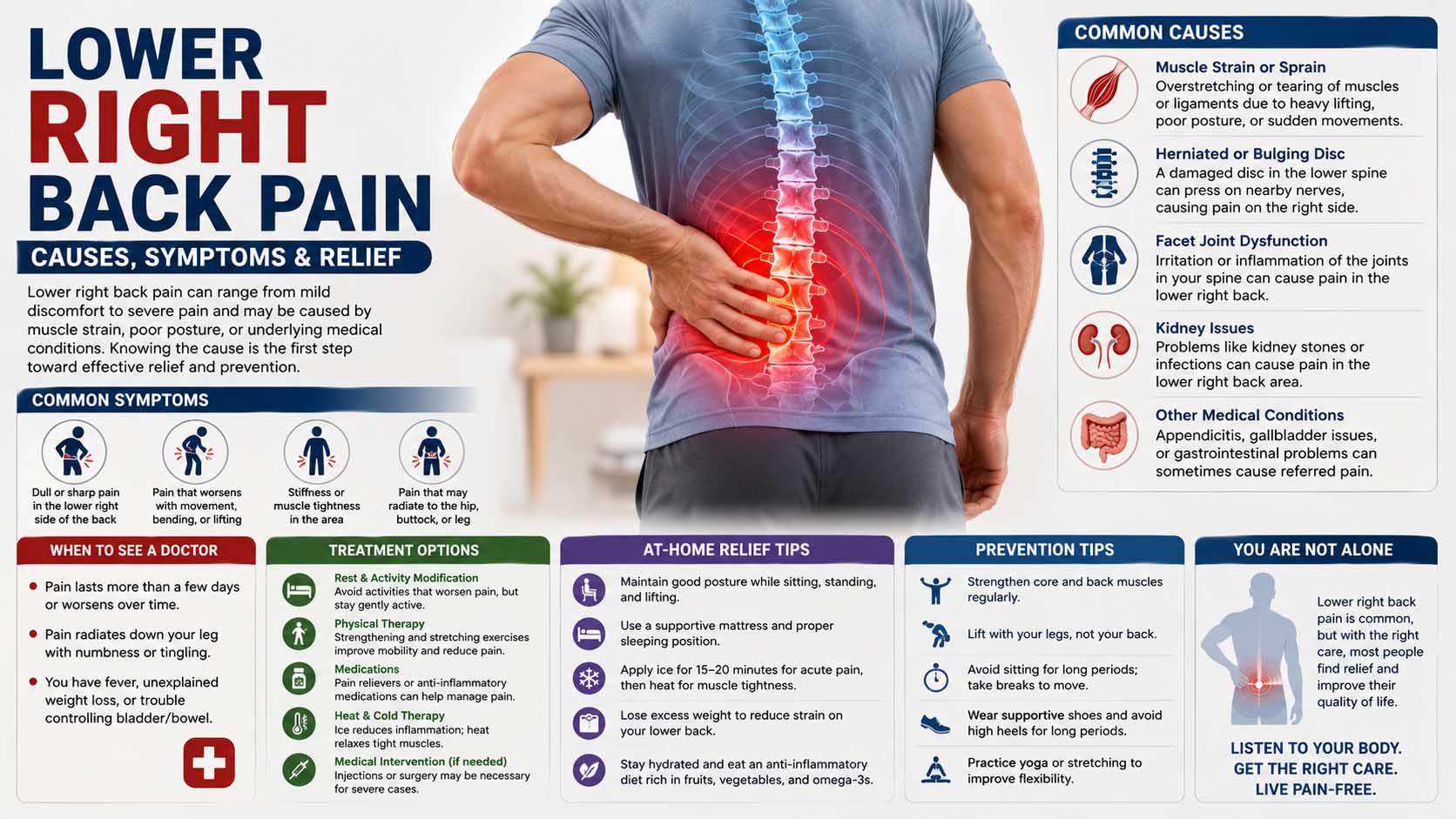
The sensation can vary depending on the tissue or organ involved. For example, muscle-related discomfort may feel dull, tight, or sore, while irritated nerves may cause sharp, burning, or electric sensations.
Some people experience pain in lower right back only when bending, twisting, lifting, or standing. Others notice a constant ache even while resting.
The pain may stay in one small area or spread toward the buttock, hip, groin, abdomen, or leg. Therefore, noticing exactly where it travels can provide useful clues.
If discomfort extends higher toward the rib cage, reviewing pain around ribs and back symptoms can help distinguish lower lumbar discomfort from pain involving the chest wall, ribs, or nearby internal structures.
Common Causes of Lower Right Back Pain
Most episodes of back pain do not have a dangerous cause. Still, several different conditions can produce discomfort on the right side.
Muscle or Ligament Strain
A strained muscle is a common explanation, particularly when pain starts after lifting, exercise, repetitive movement, or an awkward twist.
The area may feel tender or stiff. Likewise, bending or changing position may make symptoms worse.
Even everyday activities can trigger a strain. For instance, moving furniture, carrying a heavy bag, doing unfamiliar exercise, or working in an awkward position can overload the lower-back muscles.
Joint and Spine Problems
The vertebrae and joints of the lower spine handle considerable stress during daily movement. As a result, age-related changes, joint irritation, or disc problems can contribute to right lower back pain.
A herniated or irritated disc can sometimes affect a nearby nerve. In that case, pain may travel into the buttock or leg rather than remaining confined to the back.
Arthritis and degenerative changes may also cause stiffness and aching, particularly after inactivity or prolonged physical activity.
Sacroiliac Joint Pain
The sacroiliac joints connect the lower spine to the pelvis. Irritation around the right sacroiliac joint may produce one-sided pain near the lower back or upper buttock.
Typically, prolonged sitting, standing, climbing stairs, or moving from sitting to standing can aggravate symptoms.
However, several conditions can cause pain in this region, so location alone cannot confirm sacroiliac joint dysfunction.
Could Right-Sided Back Pain Come From the Kidney?
Yes, although kidney-related pain often feels different from typical muscular back pain.
The kidneys sit relatively high in the back, beneath the lower ribs on either side of the spine. Therefore, kidney pain is often felt in the flank or side of the back rather than directly over the lowest part of the lumbar spine.
A kidney stone can cause intense pain that may come in waves and travel toward the lower abdomen or groin. Nausea, vomiting, or blood in the urine can occur as well.
Meanwhile, a kidney infection may cause back or flank pain along with fever, chills, nausea, and urinary symptoms such as painful or frequent urination.
Because these problems involve the urinary system, someone with recurring kidney, bladder, or urinary symptoms may also want to understand what is a urologist and when this type of specialist becomes involved in care.
When Lower Back Pain on the Right Side May Be Abdominal
Sometimes pain that seems to originate in the back actually comes from an abdominal organ.
Appendicitis is one example. It often begins with discomfort around the belly button before shifting toward the lower-right abdomen, although symptoms can vary. Nausea, loss of appetite, fever, and increasing abdominal tenderness may occur.
Therefore, significant pain on right side of stomach that occurs alongside back discomfort deserves careful attention, particularly when it becomes progressively worse.
Gallbladder problems usually cause discomfort higher in the right abdomen rather than the lower back. However, pain can sometimes spread toward the back or right shoulder blade.
Digestive conditions can also produce abdominal discomfort that feels as though it extends toward the back.
Lower Right Back Pain in Women: Possible Pelvic Causes
Some causes of lower right back pain female patients experience may involve the reproductive system.
Menstrual cramps, for instance, can sometimes cause aching across the lower abdomen and back. Ovulation may also cause temporary one-sided pelvic discomfort in some people.
Ovarian cysts can cause pelvic pressure or pain that occasionally radiates toward the back. Many cysts cause few or no symptoms, yet larger, bleeding, or ruptured cysts can produce more noticeable discomfort.
Sudden severe pelvic pain with nausea or vomiting needs prompt medical assessment because ovarian torsion is one possible cause.
Pregnancy also changes posture and places extra strain on the lower back. However, new or severe pain during pregnancy should be discussed with a healthcare professional, particularly when accompanied by bleeding, contractions, fever, urinary symptoms, dizziness, or other concerning changes.
Pain location can sometimes be misleading. For comparison, lower left abdomen pain has a different range of possible causes, which shows why the side and accompanying symptoms both matter during evaluation.
Can Sciatica Cause Pain on the Right Side?
Sciatica refers to symptoms associated with irritation or compression of the sciatic nerve or its nerve roots.
Usually, the pain starts around the lower back or buttock and travels down one leg. Tingling, numbness, or weakness can also occur.
If only the right nerve roots are affected, symptoms may develop mainly on the right side.
However, not every episode of lower back pain right side that extends into the leg is sciatica. Therefore, persistent neurological symptoms should be assessed rather than diagnosed solely by pain location.
Symptoms That Can Help Identify the Cause
Paying attention to accompanying symptoms can make one-sided back pain easier to understand.
| Symptoms or Pattern | Possible Explanation |
|---|---|
| Pain after lifting or twisting | Muscle or ligament strain |
| Pain traveling down one leg | Nerve irritation or sciatica |
| Flank pain with painful urination | Urinary or kidney problem |
| Severe waves of pain toward the groin | Kidney stone |
| Fever with flank or back pain | Possible kidney infection or another infection |
| Lower-right abdominal tenderness | Possible abdominal cause |
| Pain linked with pelvic symptoms | Possible reproductive or pelvic cause |
| Pain triggered by certain movements | Musculoskeletal cause more likely |
This table is only a quick reference. Since symptoms overlap, it cannot replace an examination or medical diagnosis.
For instance, pain under right breast is located much higher than typical lower-back discomfort and can involve a different set of structures and conditions.
When Is Lower Right Back Pain an Emergency?
Most one-sided back pain does not require emergency treatment. However, certain warning signs need prompt medical attention.
Seek urgent care if severe back pain follows a significant fall, crash, or other trauma. Likewise, get medical help if the pain occurs with fever, persistent vomiting, severe abdominal pain, or significant urinary symptoms.
New loss of bladder or bowel control requires emergency assessment. So does numbness around the groin, genitals, or inner thighs because these symptoms can occur with serious compression of nerves at the bottom of the spinal canal.
Progressive weakness or significant numbness in one or both legs also needs prompt evaluation.
Meanwhile, unexplained back pain accompanied by substantial unintentional weight loss, a history of cancer, immune suppression, or other serious medical conditions deserves professional assessment.
How Doctors Diagnose Persistent Right Lower Back Pain
A healthcare professional usually starts by asking how and when the symptoms began. They may want to know whether an injury occurred, what movements affect the pain, and whether discomfort travels elsewhere.
They will also ask about fever, urinary changes, bowel symptoms, numbness, weakness, abdominal pain, and other symptoms that could point away from a simple muscle problem.
During the physical examination, the clinician may check your back movement, strength, reflexes, sensation, and areas of tenderness.
Many uncomplicated episodes of lower-back pain do not require immediate imaging. Instead, the symptoms and examination often provide enough information to begin conservative care.
However, blood tests, urine tests, X-rays, ultrasound, CT scans, or MRI may be appropriate when the history suggests infection, kidney disease, fracture, significant nerve compression, or another specific condition.
For more general information about causes, diagnosis, and treatment of low-back conditions, the National Institute of Neurological Disorders and Stroke overview of low back pain provides additional medical guidance.
Home Care for Mild Lower Right Back Pain
If your symptoms are mild and there are no warning signs, simple home care may help.
Keep Moving Within Your Comfort Level
Complete bed rest generally is not recommended for ordinary nonspecific lower-back pain. Instead, gentle everyday movement can help you stay mobile while the irritated tissues settle.
However, avoid movements that clearly worsen the pain. Heavy lifting and strenuous exercise may need to wait until symptoms improve.
Try Heat or Cold
Cold packs can feel soothing after a recent minor strain, especially when soreness follows physical activity. Meanwhile, heat may help some people with muscle tightness or stiffness.
Protect your skin by wrapping hot or cold packs rather than placing them directly against bare skin.
Return to Activity Gradually
Once discomfort improves, gradually return to normal activities. Walking can be a practical starting point for many people.
Later, exercises that improve trunk, hip, and lower-body strength may help support normal movement. A physical therapist can recommend appropriate exercises when pain repeatedly returns or limits daily activities.
What About Pain Medicines?
Nonprescription pain relievers may help some people manage short-term back discomfort. However, the safest choice depends on your health history and other medications.
For example, nonsteroidal anti-inflammatory drugs such as ibuprofen are not appropriate for everyone, including some people with kidney disease, stomach ulcers, certain heart conditions, or those taking particular medications.
Therefore, follow product directions and ask a pharmacist or healthcare professional if you are unsure which medicine is appropriate for you.
Also, avoid relying on medication to repeatedly push through activities that clearly aggravate the problem.
How Long Does Recovery Usually Take?
Recovery depends on the cause rather than simply which side hurts.
Many episodes of uncomplicated acute lower-back pain improve over days to several weeks. Still, symptoms may fluctuate during recovery.
A mild muscle strain may gradually settle as the tissue heals. In contrast, nerve-related symptoms, significant injuries, or persistent joint problems may take longer and sometimes need physical therapy or other treatment.
Kidney, abdominal, and pelvic conditions have completely different recovery timelines because treatment targets the underlying medical problem.
If your symptoms are not improving, repeatedly return, or interfere with sleep and everyday activities, schedule a medical evaluation rather than continuing self-treatment indefinitely.
Reducing the Chance of Another Episode
You cannot prevent every case of back pain. However, several habits may reduce unnecessary strain.
First, build up exercise gradually, especially after a long period of inactivity. Then, include strength and mobility exercises that match your fitness level.
When lifting objects, keep the load close to your body and avoid combining heavy lifting with sudden twisting whenever possible.
Meanwhile, change positions periodically if your work involves prolonged sitting or standing. No single “perfect” posture prevents all back pain, but staying in one uncomfortable position for hours can contribute to stiffness.
Regular walking and other physical activity can also support general strength, mobility, and health.
Practical Next Steps
Lower right back pain often comes from muscles, joints, or other structures around the lower spine, especially when symptoms begin after physical activity and change with movement. Still, kidney, urinary, abdominal, nerve, and pelvic conditions can sometimes produce pain in a similar area.
Therefore, consider the full symptom pattern rather than focusing only on which side hurts. Mild pain without warning signs can often be managed initially with comfortable movement, temporary activity changes, and appropriate self-care.
However, seek medical advice when pain persists, repeatedly returns, or affects normal movement. More urgent evaluation is appropriate when severe pain occurs with fever, abdominal symptoms, urinary changes, significant weakness or numbness, loss of bladder or bowel control, or major trauma.
Frequently Asked Questions
What Is the Most Common Cause of Lower Right Back Pain?
Musculoskeletal problems are common causes of one-sided lower-back pain. For example, muscles or ligaments may become irritated after lifting, twisting, unfamiliar exercise, or repetitive activity. However, symptoms and medical history must be considered because other conditions can affect the same area.
How Can I Tell if Right Back Pain Is Muscular or Kidney-Related?
Muscular pain often changes with movement and may be tender when you press or use the affected muscles. In contrast, kidney pain is often felt higher in the flank and may occur with fever, nausea, blood in the urine, or painful or frequent urination. These differences are not absolute, so seek medical assessment when the cause is unclear.
Why Does My Lower Right Back Hurt When I Move?
Pain that becomes worse with bending, twisting, lifting, or changing position often suggests a musculoskeletal problem. Muscle strains, irritated joints, and some disc problems can behave this way. However, persistent or severe symptoms still deserve assessment.
Can Gas Cause Lower-Right Back Discomfort?
Gas and digestive problems can sometimes cause abdominal pressure or discomfort that seems to spread toward the back. However, significant or persistent right-sided pain should not automatically be blamed on gas, especially when fever, vomiting, abdominal tenderness, urinary changes, or other concerning symptoms are present.
Should I Exercise With Lower-Right Back Pain?
Gentle movement is often reasonable for uncomplicated back pain, while prolonged bed rest can contribute to stiffness. However, stop exercises that sharply increase pain or cause new numbness, weakness, or radiating symptoms. If you are unsure about the cause, a healthcare professional or physical therapist can help you choose an appropriate activity plan.